When a plastic component fractures under sudden load, the consequences range from product recalls to safety incidents. For German materials testing laboratories operating under DIN EN ISO 179-1:2023, having a pendulum impact tester that delivers repeatable, traceable results isn't optional — it's a regulatory and commercial necessity.
The PG-D50 Digital Charpy Impact Strength Tester from Pego Tester addresses this demand head-on. Built to ISO 179, GB/T 1043, and JB/T 8762, it covers the full spectrum of Charpy testing requirements that German labs face daily.
[Image: Pego PG-D50 Digital Charpy Impact Tester with LCD touch screen]
Precision That Meets the Standard
The PG-D50 reads impact energy down to 0.01J resolution and angle accuracy of 0.01°. Why does this matter? Under DIN EN ISO 179-1:2023, the test apparatus must be capable of resolving the absorbed energy within strict tolerances. A tester that rounds to 0.1J can mask subtle differences between material batches — differences that become critical when certifying components for automotive or electrical applications.
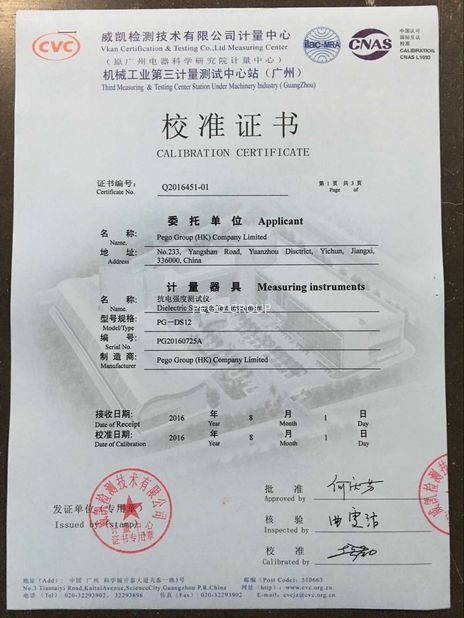
The unit ships with a third-party laboratory calibration certificate, giving German labs a documented traceability chain from day one.
Flexible Energy Range for Diverse Materials
Not every plastic fractures the same way. Brittle polymers might absorb under 1J; reinforced composites can require up to 50J to break. The PG-D50 handles both extremes:
• Low-energy range: 1J, 2J, 4J, 5J at 2.9 m/s impact speed
• High-energy range: 7.5J, 15J, 25J, 50J at 3.8 m/s impact speed
The pendulum hammers and weights for each energy level come included in the standard configuration, along with sample clamps and socket head wrenches. No need to source accessories separately.
Built for the Lab Bench
Testing efficiency depends on more than raw specifications. The LCD touch screen provides real-time readouts in J/m, kJ/m², kg-cm/cm, or ft-lb/in — selectable at the tap of a finger. A built-in micro-printer generates hard-copy results on the spot, which is useful for audit trails and batch documentation.
Jaw support spacing adjusts between 40mm and 95mm in four positions, accommodating the standard specimen geometries defined in ISO 179-1. The impact blade angle is set at 30° with a corner radius of R=2mm±0.5mm, matching the standard's geometry requirements. Support blade corner radius sits at R=1mm.
Applicability Across Industries
The PG-D50 is suited for determining impact toughness of non-metallic materials including hard plastics, reinforced nylon, glass-reinforced plastic, ceramics, cast stone, and electrical insulating materials. In a German context, these materials show up across sectors — from automotive interior components to electrical housings certified under IEC standards.
Chemical companies, university research departments, and third-party inspection bodies all run Charpy tests as part of material qualification. A tester that handles the full energy range in one platform reduces capital expenditure and calibration overhead.
Compliance and Certification
Beyond ISO 179-2000 compliance, the tester meets GB/T 1043-2008, JB/T 8762-1998, and GB/T 18743-2002. The included third-party calibration certificate provides the documented evidence that DIN EN ISO 13802 requires for pendulum impact machine verification.
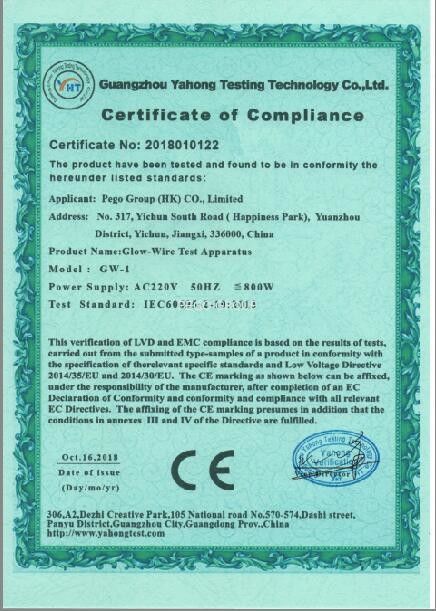
For German importers and lab managers concerned about CE marking and equipment documentation, Pego Tester has supplied equipment to TÜV Rheinland, BSH Group, and LIA Laboratories — all of which have provided positive feedback on product quality and after-sales support.
About Pego Tester
Pego Tester (Pego Electronics Yi Chun Company Limited) manufactures electrical safety and materials testing equipment with a focus on ISO and IEC compliance. Their product line serves testing laboratories, certification bodies, and quality inspection departments worldwide.


 Your message must be between 20-3,000 characters!