The IP Code is a globally recognized evaluation system for dust and water protection of electrical equipment. ISO 20653 and IEC 60529 are its two core standards. Both are formulated around "dust protection, water protection, and contact protection", but they differ significantly in positioning — IEC 60529 is a universal standard covering all industries’ electrical equipment, while ISO 20653 is an industry-specific standard optimized for road vehicle scenarios. Clarifying their connection and differences is crucial for enterprise product design, compliance, and market access.
1. Core Positioning and Origin
● IEC 60529: Developed by the International Electrotechnical Commission (IEC), its latest version is IEC 60529:1989amd2:2013cor1:2019. It applies to enclosures of electrical equipment with a rated voltage ≤72.5kV and is the basic standard for global IP protection testing. Focusing on "universality", it defines the two-digit grading logic of the IP Code for "dust + water protection" and covers all scenarios (consumer electronics, industrial equipment, etc.), providing a unified evaluation basis for various products.
● ISO 20653: Developed by ISO/TC 22 (Road Vehicles Technical Committee) under the International Organization for Standardization (ISO), its latest version is ISO 20653:2023. It is a specialized derivative standard of IEC 60529 for road vehicles. To adapt to complex environments (heavy rain, high-pressure car washing, sand and dust) for vehicle components like sensors and battery packs, it optimizes test conditions, adds exclusive "K" protection codes, and aligns with actual vehicle working conditions, becoming the core standard for the automotive industry.
2. Core Commonalities
The two share the IP Code grading system with three key commonalities:
1). Unified protection dimensions, covering "dust protection, water protection, and contact protection". Dust levels range from 0 to 6, and water levels from 0 to 8; higher numbers mean stronger protection.
2). Consistent IP Code logic, both using the "IP + two digits" format. Single-type protection can be indicated by omitting one digit, and ISO 20653 uses "K" as an exclusive suffix.
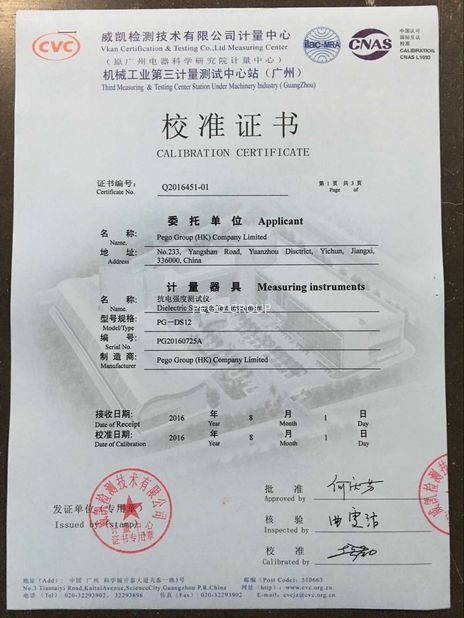
3). Consistent testing principles, both following "simulate real environments, evaluate accurately". The process includes appearance check, pre-treatment, special testing, and functional testing, requiring standardized instrument calibration and controllable environments.
3. Core Differences
|
Comparison Dimension
|
IEC 60529 (Universal Standard)
|
ISO 20653 (Vehicle-Specific Standard)
|
|
Application Scope
|
Covers electrical equipment across all industries (mobile phones, motors, washing machines, medical equipment, etc.) with no scenario restrictions
|
Only applies to electrical equipment of road vehicles (sensors, battery packs, vehicle lamps, etc.)
|
|
Test Details
|
Simulates dust/water in ordinary environments with general, simplified conditions
|
Simulates vehicle-specific scenarios (sand, high-pressure car washing, wading) with stricter, adaptable conditions
|
|
Exclusive Codes
|
No "K" codes, only basic two-digit grading
|
Adds "K" codes (e.g., 5K, 6K, 4K, 6K) to meet high-pressure protection needs of vehicles
|
|
Scenario Adaptation
|
Meets general protection for daily and industrial scenarios
|
Meets special protection for all vehicle scenarios (complete vehicles, components)
|
4. Conclusion
The two are not substitutes but complementary — "universal foundation + industry specialization". IEC 60529 builds the universal IP protection framework, while ISO 20653 fills the gap in automotive industry protection standards. Accurately following the corresponding standards is key for enterprises to ensure product reliability and enhance market competitiveness.


 Your message must be between 20-3,000 characters!