1. Why the Test Chamber Is Replacing the Open Rain Room
Traditionally, waterproof testing has been conducted using open-style setups: a drip box mounted on the ceiling, an oscillating tube secured by a stand, and a handheld spray nozzle aimed at the test specimen. While this approach yields data that meets standard requirements, it is highly demanding in terms of infrastructure—requiring a dedicated test room, floor drainage, measures to prevent water from splashing onto surrounding equipment, and a significant amount of floor space.
When companies validate new products, they often face a common dilemma: achieving a specific waterproof rating is a mandatory requirement, yet it is rarely feasible to dedicate an entire facility—and the associated budget—to a single piece of testing equipment. Small to medium-sized manufacturers, third-party testing laboratories, and university R&D centers all share the same pain point: they have a genuine need for testing, but lack the space or budget to construct a standalone, purpose-built facility.
An integrated waterproof test chamber addresses this exact problem. It combines systems for IPX1/2 vertical drip testing, IPX3/4 oscillating tube spraying, and IPX5/6 high-pressure water jetting into a single, self-contained unit. A specimen can be mounted once and subjected to all six levels of testing within the same machine. Furthermore, an integrated water circulation system allows water to be reused internally, eliminating the need for a continuous external water supply.
2. IPX1 to IPX6: What Each Level Tests
To judge what the machine is worth, start with the physical situation behind each of the 6 tests. They are not 6 steps up a single scale of "water resistance". They load the enclosure in 6 different ways.
IPX1 – vertical dripping water. The specimen is positioned as it would be during normal use. A drip box located above releases water vertically at a rate of 1 mm/min for a duration of 10 minutes. This simulates the mildest form of water ingress, such as that caused by condensation or light dripping. The acceptance criteria go beyond a simple "no water ingress" requirement; the equipment must remain fully functional, and no live parts may be accessible or touched by any water that does enter.
IPX2 – dripping water with the enclosure tilted 15°. The precipitation intensity is increased to 3 mm/min. The product enclosure is tilted 15° from its normal operating position in each of four directions, with the test lasting 2.5 minutes per direction, for a total duration of 10 minutes. This test identifies potential sealing weaknesses that may emerge when a product is installed or positioned at an angle; many designs are watertight when upright, but once tilted, water can collect along seams and flow in the direction of gravity.
IPX3 – spraying water. The oscillating tube swings back and forth across an arc of ±60°. The nozzle aperture is matched to the radius of the tube and the number of nozzles; the flow rate per nozzle is approximately 0.07 L/min, and the test duration is 10 minutes. Common radii for the oscillating tube include R400, R600, and R800. A larger radius allows for a greater projected surface area of the test specimen to be covered. This test level simulates moderate, sustained rainfall—a type of environmental condition frequently encountered by outdoor lighting, charging station enclosures, and security cameras.
IPX4 – splashing water. The specifications are largely identical to those of IPX3, with one key difference: the oscillation range is expanded from ±60° to ±180°, allowing for omnidirectional spraying of the sample. This is the most frequently cited rating in the industry—often referred to as "splash-proof." Products such as mobile phones, headphones, speakers, and power tools—anything that might be affected by a spilled cup of water on a tabletop—frequently tout this rating as a key selling point.
IPX5 – water jets. Starting from this level, the testing method changes: instead of using an oscillating tube, a 6.3 mm diameter nozzle is employed. Water is sprayed onto the sample from a distance of 2.5–3 meters at a flow rate of approximately 12.5 L/min and a pressure of 30 kPa. The duration of the test is determined by the surface area of the enclosure—1 minute per square meter, with a minimum duration of 3 minutes. This procedure simulates exposure to rinsing, water jets (such as those from a hose), or similar direct water impact.
IPX6 – powerful water jets. The nozzle aperture is increased to 12.5 mm, the flow rate rises to approximately 100 L/min, and the pressure is raised to 100 kPa, with all other conditions remaining unchanged. This level corresponds to impacts comparable to heavy rain, surges washing over a deck, or the force of a high-pressure water jet.
It is worth noting that the destructive potential of IPX5 and IPX6 ratings lies not in the sheer volume of water, but in the specific combination of pressure and flow rate. High-pressure water jets push components like sealing rings, snap-fits, and breathable membranes to their structural limits. Many products that pass the IPX4 test fail at the IPX6 level—often due to a drainage or ventilation opening that was overlooked during the design phase.
3. What the Integrated Chamber Buys You – and It Is Not Just Floor Space
A single unit replaces three separate systems, minimizing its footprint. In an open-style setup, components like drip box, oscillating pipe racks, and spray zones typically occupy a square area of three to five meters—not including the additional space required for safe operation and access. A chamber-style design, by contrast, houses all these elements within an enclosed chamber. It generally takes up only the space of one or two workstations and requires no specialized facility modifications or floor drainage trenches; it can simply be placed on any level surface within the factory floor and even relocated if necessary.
Recirculated water lowers the long-run cost. This is the item people underestimate. IPX6 runs at 100 L/min, so a 3 min minimum test consumes 300 litres. On mains water, one full 6-rating validation reaches tonnage. The chamber pairs a tank, filtration and a pump loop, so the same water circulates and you only top up evaporation and carry-off. For a production lab running batch sampling, the difference shows up within a year.
Test conditions stay reproducible. An open rig takes the room's influence. Draughts push the spray off target, water temperature shifts with the season, and a hand-held nozzle depends on the operator's angle and distance. Two technicians get two results. Inside the chamber the environment is closed and stable, and the program controls tube angle, nozzle distance, flow and pressure. That reproducibility is a hard requirement for a lab that issues CNAS reports or faces third-party audits.
One set-up runs all six ratings back to back. The sample clamps onto a turntable. Changing mode means calling a program on the touchscreen, with no re-fixturing, no re-positioning and no rewiring. Powering the sample during the test matters most. Many waterproofing requirements really mean "keeps working safely after water gets in", and only a live test exposes how the product actually fails. Check turntable load capacity and the built-in sample socket carefully when you specify the machine.
Safety and housekeeping costs fall. Powerful jets are a real hazard in an open bay: mist everywhere, wet floors, nearby electrical equipment soaking up moisture. The closed chamber contains the spray and keeps the test area dry. Buyers tend to overlook this saving at the approval stage and only feel it six months into operation.
4. The Limits You Have to Admit
Strengths are easy to write. Anyone buying equipment needs the boundary instead.
Sample size is a hard limit. Internal cavity dimensions set the largest product you can test. Common cavities sit around 1.3 m, which handles small devices, components and modules. Complete units, large cabinets and vehicle parts will not fit. Tube radius limits you the same way: an R400 tube cannot cover the projected area that needs R800. Do not stop at "supports IPX1–IPX6". Work backwards from the three dimensions of your largest sample to the cavity and tube radius you need, or you will buy a machine that covers half your product line.
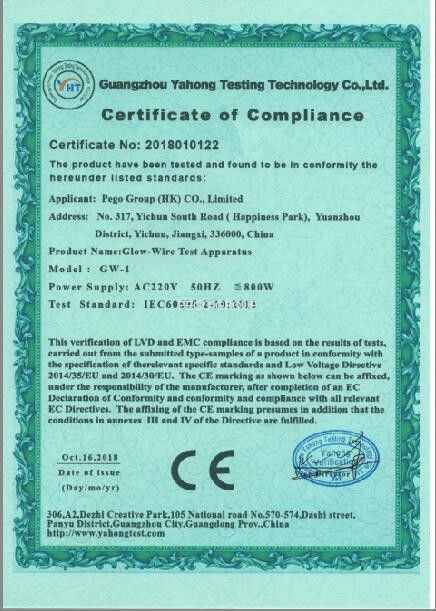
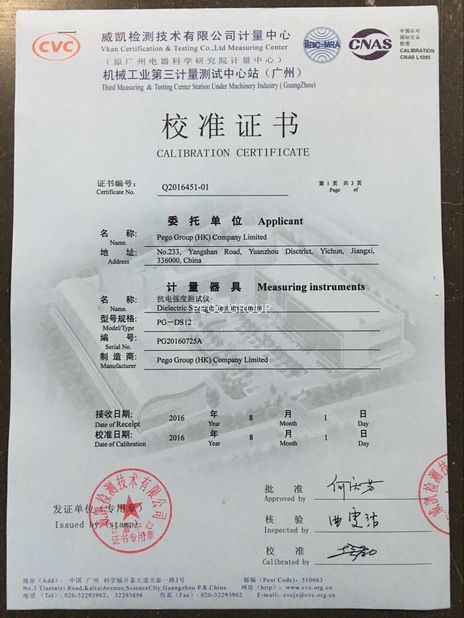
High-rating tests expose under-specified tanks and pumps. IPX6 needs a steady 100 L/min at 100 kPa. Size the pump, piping and tank to IPX3 duty, and the flow will sag and the pressure will drift, so the test condition no longer holds. Acceptance testing may not reveal this. A third-party calibration or a round-robin comparison usually does. PEGO builds the water circuit for IPX6 flow and pressure. Its integrated chamber fully meets the IPX1 to IPX6 test requirements and passes third-party calibration.
It cannot handle requirements beyond the IPX6 level. The physical conditions for IPX7 (short-term immersion), IPX8 (continuous immersion), and IPX9K (high-temperature, high-pressure water jetting) differ entirely from those of a spray-test chamber; therefore, a standard integrated test chamber is insufficient. If your product line includes wearables, underwater equipment, or automotive components, IPX7/8 testing is unavoidable, necessitating the acquisition of separate immersion test equipment.
High integration widens the impact of a single failure. Three systems share one cavity, one water circuit and one controller, so any fault can stop all six ratings at once. In an open rig each device stands alone: whatever breaks, you fix that one. That puts a premium on the supplier's service response and spare-parts stock.
Mode changes take time and carry contamination risk. Moving from drip to jet means switching the water circuit, draining and cleaning the cavity. During a high-rating test, water left from the previous stage can disturb the sample's starting condition, and residue between products can interfere. Build this time into the batch cycle. Do not estimate capacity from single-test duration alone.
Up-front cost runs above single-purpose rigs. A properly built chamber usually costs more than a simple drip unit plus an oscillating-tube stand. The payback comes from floor space, water, labour and site fit-out spread over several years. If you run only a handful of validation tests a year, the investment may not pay off.
5. Conclusion
The value of an integrated waterproof test chamber lies, in essence, in condensing a testing capability—which would otherwise require a dedicated facility and extensive infrastructure—into a single piece of equipment that can be installed within an existing factory floor. It does not aim to be the best in every possible performance metric; rather, it is specifically optimized for a smaller footprint, reduced water consumption, consistent results, and operational efficiency. The trade-offs for these advantages include limitations on specimen size, an inability to perform tests for ratings above IPX7, and a higher vulnerability to single-point failures.
For small-to-micro electronic devices, components, or modules that require comprehensive validation across the IPX1 to IPX6 range—and where space or budget is a constraint—this type of equipment represents the most pragmatic solution. However, if your product line includes large, complete units or requires testing for immersion-level (IPX7+) ratings, this chamber should be viewed only as one component of a broader testing strategy, rather than a universal, all-encompassing solution.


 Your message must be between 20-3,000 characters!